Explore your next steps
Your guide to piano lessons in Cambridge
Find your starting point, set musical goals and build a useful routine between music lessons.
01
Getting started
Start with a song you enjoy
A favourite song gives us something concrete to work towards. Tell me whether you are drawn to its melody, accompaniment or overall sound. We can choose a short section and an arrangement that suits your experience. You do not have to reproduce every part of the original recording. A simple version can help you understand how the music works while developing skills you can use in other pieces.
Begin without reading music
As a beginner, you do not need to read a score before starting piano lessons. We can explore the keyboard, find a comfortable position and connect a small movement with the sound it produces. My chord-based approach offers one way into playing songs, alongside more traditional teaching. New terminology makes more sense when there is a practical example. Ask whenever an explanation is unclear, and give yourself time to become familiar with each new idea.
Continue your music education at your current level
If you played years ago or have taught yourself some songs, we can begin with what feels familiar now. Your music education can continue from that starting point, with room to revisit skills and improve your control. Reading, coordination and confidence may develop at different speeds. Rather than repeating everything from the beginning, we can identify useful strengths and choose one area to work on. Bring a familiar piece or describe the music you once enjoyed. There is no need to practise to a particular standard before contacting me.
Choose between piano and keyboard instruments
I teach acoustic piano, keyboard and electric piano or keyboard synths. Let me know what you use at home and what you would like to play. You do not need to own a piano before attending lessons at my teaching room, although access to an instrument helps between appointments. If you are considering a purchase, ask for advice first. Your space, budget and musical interests can help guide a practical choice.
Choosing piano teachers: start with your musical goals
Different piano teachers explain ideas in different ways. Tell me whether you learn most easily by watching a demonstration, hearing an example or exploring a short passage yourself. A first conversation is a chance to discuss what you want to achieve and what you find difficult. You do not need a polished performance to begin. If you already play at an advanced level, bring a specific question about a piece, accompaniment or style so we can discuss a useful focus.
02
Chords & expression
Understand the shape of a triad
A triad is a three-note chord and provides a useful starting point for many songs. We can find a major or minor chord, listen to its character and notice the shape your hand makes. Connecting the sound with the movement helps the idea become practical. Rather than treating each chord as an isolated fact, we can place it within a short sequence and hear how the music changes as you move between them.
Make chord changes more comfortable
A chord sequence becomes musical when the changes fit the rhythm. We can look for notes that stay in place, notice where a hand needs to move and work at a manageable speed. Preparing the next shape can make a transition feel less hurried. Once a short sequence becomes clearer, try it within the song. The aim is not simply to collect chord names but to use them with a reliable pulse.
Give each hand a clear role
Playing melody and accompaniment together can take some coordination. We can explore each part separately, identify where the hands meet and simplify a pattern where useful. A short phrase is often a better starting point than an entire page. Listen for the balance between the parts as well as the correct notes. Your accompaniment should support the musical idea, and its complexity can develop as your confidence and control grow.
Explore the styles that interest you
My teaching includes pop, rock, blues, jazz and folk, with classical piano also available. Different pieces introduce different questions about rhythm, harmony and expression. We might compare two ways to accompany a melody or listen to how a phrase builds towards its ending. My work as an arranger and performing musician informs this practical interest in how parts fit together. We can choose music that makes the skills you are learning meaningful.
Listen to the voice within a melody
Singing or humming a short phrase can help you notice where it needs space. Play it at the keyboard and keep the pauses you heard, even when your fingers could fill them with extra notes. Listen to other instruments too: a flute melody may suggest a lighter touch, while a guitar accompaniment can show how rhythm supports a voice. These are listening examples for piano playing. Try a quieter left hand and hear whether the melody becomes easier to follow.
03
Practice & music theory
Leave with a specific task
A practice task is easier to follow when you know what to listen for. Give technical exercises a clear focus, such as moving evenly between two chords, and connect them with a piece you enjoy. You might work on a particular chord change, a steady accompaniment or a short melodic phrase. Ask for clarification before leaving if an instruction feels vague. At the next lesson, explain what became easier and where you were unsure. That feedback helps us adjust the work and avoids spending another week repeating something without understanding its purpose.
Work on the moment that interrupts you
When a passage keeps stopping the flow, give that moment some attention. Slow down, use a smaller section and notice whether the difficulty comes from the notes, movement or rhythm. Then connect the section with the music on either side. Repeating from the beginning every time can leave the difficult change unexplored. Balance this focused work with something you enjoy playing so that practice includes musical satisfaction as well as problem-solving.
Make music theory useful at the keyboard
Music theory can explain something you have already heard or played: why a chord sounds different, how a rhythm is organised or what happens when a melody repeats. We can connect these ideas with your current music. Formal theory and sight-reading are not entry requirements for my chord-based approach. Their place in lessons can develop around your aims, with explanations that help you make musical decisions rather than disconnected facts to memorise.
Support a younger learner
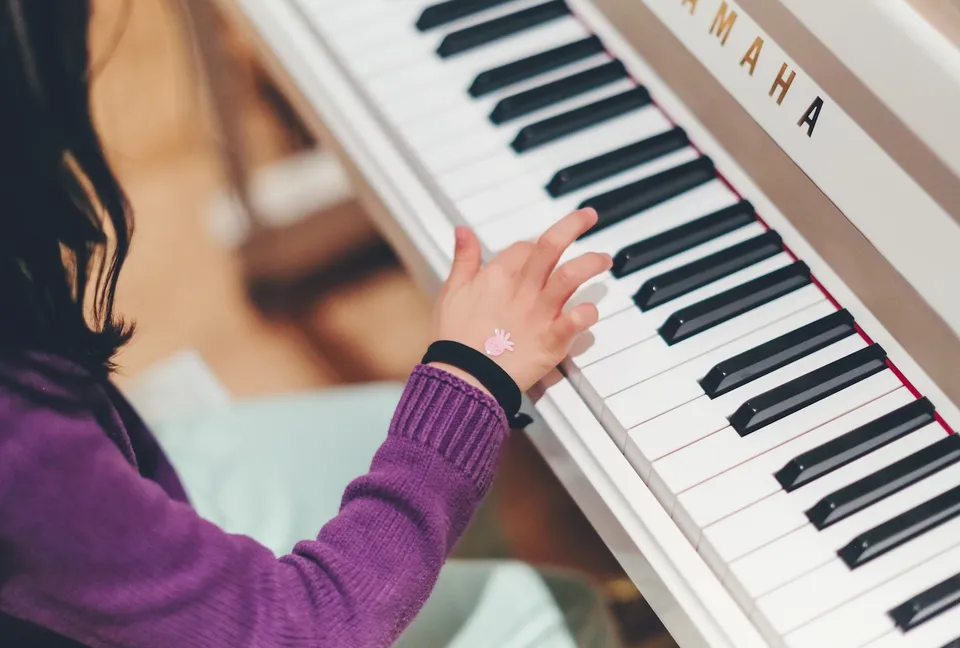
For a child, share their age, interests and any previous experience when enquiring. Learning should include enjoyable music as well as new challenges; ask which tunes they are interested in playing. A clear task and a regular opportunity to revisit it can be more useful than an ambitious practice plan that is difficult to maintain. Parents or carers can ask how to support the work without needing to play themselves. Notice which music holds the learner’s interest and which instructions need another explanation, then bring that feedback to the lesson.
Explore your musical potential through small experiments
Choose a familiar chord sequence and change one detail: its rhythm, register or the spaces between phrases. Keep a version you can play comfortably, then compare it with the experiment. This can unlock another way to hear the same music without making every note more complicated. Give yourself room to be curious and have fun. Your musical potential is something to explore over time, rather than a result measured against someone else’s progress or a promised deadline.
Prepare and polish a short performance
Playing one piece to a friend or family member can give practice a clear purpose. Choose music you know well enough to continue through a small mistake. Rehearse the opening, decide how you will finish and leave a moment of quiet at the end. A private recording can help you hear whether the rhythm stays settled. Listen for one improvement, then return to a short section instead of judging the whole performance. Ask permission before recording anyone else.
04
Planning your lessons
Visit the Hills Road teaching room
Most lessons take place in my teaching room in the Hills Road area of Cambridge. The full address is provided when your first appointment is booked. Confirm your time and travel arrangements before setting off. If you have any access requirements, mention these when enquiring so we can discuss them in advance. The location information on this website describes the area; an enquiry does not itself confirm a lesson booking.
Ask about a home visit
I may also be able to teach at your home, depending on distance and my schedule. Include your area or postcode, usual availability and details of the piano or keyboard you would use. This helps us establish whether a visit is practical before agreeing a time. Please confirm any travel and payment arrangements directly. If a home visit is unavailable, we can discuss whether lessons at my teaching room would suit you.
Plan weekly music lessons or another agreed routine
Individual lessons cost £25 for 30 minutes or £40 for 50 minutes. Lessons are pay-as-you-go, with weekly, fortnightly or another agreed pattern possible. Weekly lessons can provide a regular point to review your practice; a fortnightly pattern may suit other commitments. Think about your concentration, budget and opportunities to practise when choosing. Read the prices and cancellation information, then confirm the practical details directly. If your plans change, let me know as early as possible so the lesson time may be offered to another student.
Tell Stephen what you want to play
When you ask about piano lessons, include your experience, musical interests and usual availability. For a child, include their age; for a possible home visit, include your area and instrument details. You can read about my musical background and how lessons work before contacting me. A song you love or a skill you want to develop gives us a useful starting point for the conversation. Send a message with your questions when you are ready to get in touch.
Hear live music at West Road Concert Hall
Live performances can offer an inspiring reason to return to the piano. West Road Concert Hall, home to the University of Cambridge’s Faculty of Music, publishes a public events programme. Check the individual concert for tickets and access details. Choose one thing to listen for, such as how a pianist balances melody and accompaniment, then try a small related idea at home. Our Cambridge music venues guide introduces other places to listen; these are listening opportunities, not promises of public piano practice spaces.